

Green Practices to Consider When Hiring a Heat Pump Installation Service Provider for Eco-Friendly and Energy-Efficient Solutions
Hiring a heat pump installer with strong green practices reduces a home’s carbon footprint while protecting long-term efficiency and performance. This article explains what “green practices” mean for heat pump installation, why they matter for energy efficiency, and how responsible installers deliver measurable environmental and cost benefits. Homeowners will learn the technical checks to demand (like Manual J sizing and low-GWP refrigerant handling), the certifications and review signals that indicate a sustainable installer, and how incentives, renewable integration, and routine maintenance extend environmental gains. The guide walks through key installation practices, selection checklists, environmental benefits and efficiency metrics, applicable incentives for 2024-2025, renewable pairing with solar PV, and maintenance routines that preserve system performance. By the end you will have concrete questions to ask installers, clear criteria to compare bids, and next steps to combine electrification with renewables for the greatest long-term impact on bills and emissions.
What Are the Key Green Practices in Eco-Friendly Heat Pump Installation?
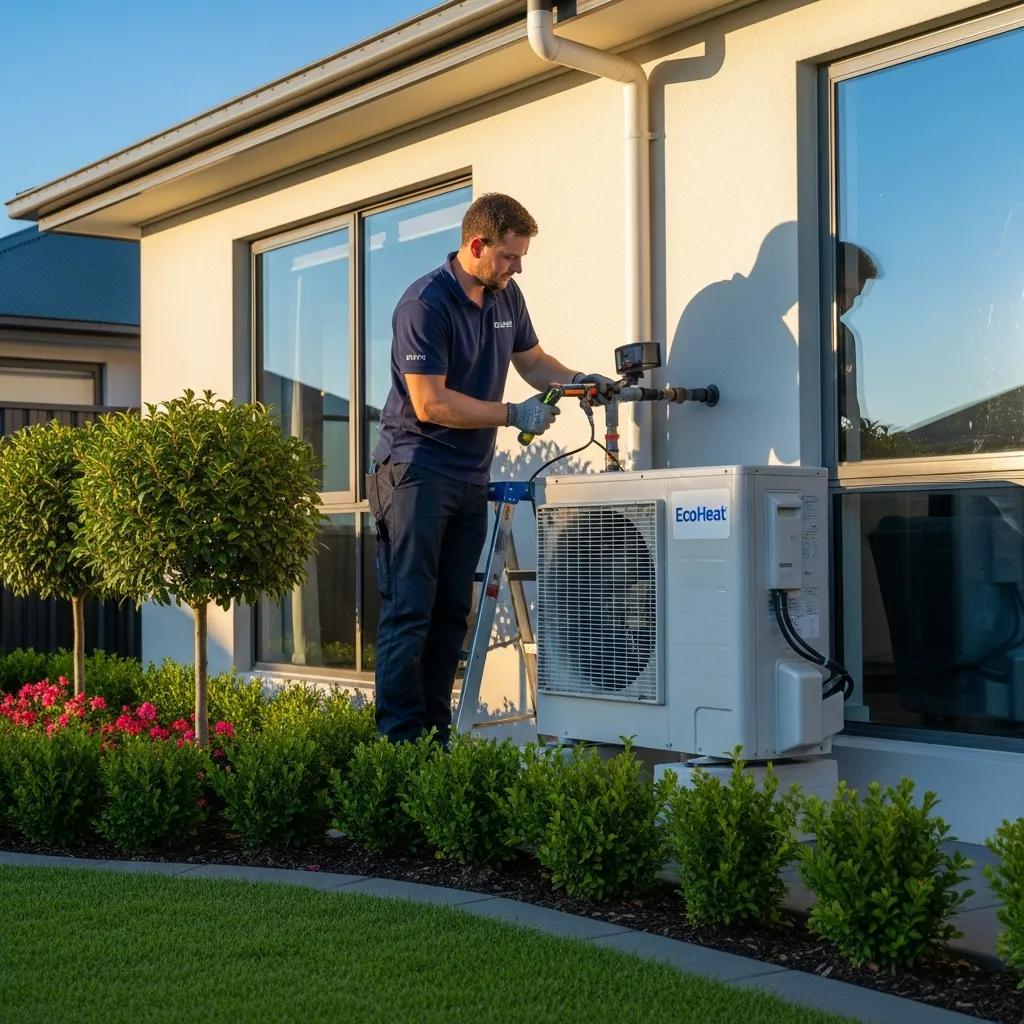
Green installation practices are specific installer behaviors and technical processes that minimize environmental harm, maximize efficiency, and ensure long-term performance. These practices include responsible refrigerant selection and handling, accurate Manual J load calculations for right-sizing, thorough duct sealing and insulation, proper waste management and end-of-life recovery, and choosing ENERGY STAR-rated or equivalent efficient equipment. Responsible installers treat the refrigerant circuit, heat exchangers, and control systems as integrated parts of a sustainable system to prevent energy waste and emissions leakage. The next subsections explain responsible refrigerant handling and why precise sizing is central to system efficiency.
This list highlights core practices installers should follow when aiming for eco-friendly installations.
- Use low-GWP refrigerants and minimize leaks through testing and recovery procedures.
- Perform a full Manual J load calculation to right-size equipment and optimize efficiency.
- Seal and insulate ductwork and refrigerant piping to prevent loss and improve COP.
- Recycle removed equipment and recover refrigerant to avoid atmospheric release.
- Install smart controls and zoning to reduce runtime and balance comfort with energy use.
These practices together reduce greenhouse gas emissions and operational energy, and they form the baseline questions homeowners should ask installers before awarding a contract.
How Does Responsible Refrigerant Handling Reduce Environmental Impact?
Responsible refrigerant handling starts with choosing refrigerants with lower global warming potential (GWP) and ensuring leak detection, recovery, and recycling during installation and service. Low-GWP refrigerants reduce lifecycle climate impact when compared to older, high-GWP options; this is significant because refrigerant release is measured in CO2e and can offset operational savings if mishandled. Installers should conduct pressure testing, vacuuming, and recovery procedures that prevent venting, and they should document refrigerant type and charge for future service. Manual semantic relation: “Refrigerant selection → reduces → lifecycle GWP emissions.” Ask installers for written refrigerant handling procedures and evidence of leak testing as part of the contract to ensure accountability and regulatory compliance.
Eco-Friendly Refrigerants for Energy-Efficient Heat Pumps
Refrigerants with high GWP are mostly used in environment control applications such as heating, ventilation, air-conditioning (HVAC), and refrigeration systems. Some refrigerants contribute to significant environmental issues and the Montreal Protocol and Kyoto Protocol have been signed to address the threats of ozone layer depletion and global warming potential. To fulfil the commitments of Kyoto Protocol, meanwhile, governments in many countries instituted phase-out plan for the use of environmentally harmful gasses in heat pump systems. For instance, EU MAC Directives, F-gas regulation, and Japan METI directives, which clearly declared their target year to use new refrigerant of GWP below 150 for mobile air conditioner and GWP below 750 for the residential air conditioner. Research interest has been stimulated to find alternative refrigerants with low or ultra-low GWP for energy conservation and environmental sustainability. Hydrofluoroolefins (HFOs) have a very low environmental impact, and thus HFOs are considering as potential candidates to replace the hydrofluorocarbon (HFC) refrigerants such as R410A, a near-azeotropic mixture of difluoromethane (R-32) and pentafluoroethane (R-125) and is commonly used refrigerant in air-conditioning applications.
Low GWP refrigerants for energy conservation and environmental sustainability, K Uddin, 2018
Why Is Proper Heat Pump Sizing Essential for Energy Efficiency?
Proper sizing via a Manual J load calculation ensures a heat pump matches the home’s actual heating and cooling requirements rather than relying on rule-of-thumb estimates or equipment replacement sizing. Manual J calculates envelope losses and gains and maps those results to equipment capacity, which prevents short-cycling from oversizing and inadequate comfort and higher runtime from undersizing. A correctly sized unit maintains COP and seasonal efficiency ratings in real operation, directly lowering energy bills and reducing wear. Homeowners should request the Manual J report and basic assumptions from the installer; verifying that the installer uses measured envelope data and not default tables is an effective way to confirm professional rigor.
How to Choose a Certified and Sustainable Heat Pump Installation Service Provider?
Choosing an installer requires evaluating credentials, documented procedures, past project evidence, and transparent paperwork such as Manual J reports and rebate assistance. The right installer demonstrates certifications that indicate technical competence in refrigerant handling and system design, provides references or case studies showing energy savings, and offers clear warranty and maintenance programs. Practical questions include whether the installer performs on-site load calculations, uses low-GWP refrigerants where appropriate, documents refrigerant recovery, and assists with incentive paperwork. The following table compares relevant certifications and why they matter for green installations, and the checklist that follows helps homeowners prioritize selection criteria.
| Certification | What it indicates | Why it matters |
|---|---|---|
| EPA Section 608 (refrigerant handling) | Certified refrigerant handling competency | Ensures legal and safe recovery/recycling of refrigerants |
| NATE (North American Technician Excellence) | Technician-level HVAC competency | Confirms ability to size, install, and commission systems properly |
| ENERGY STAR Installer affiliation | Familiarity with certified product specs | Aligns installations with high-efficiency equipment standards |
| Manufacturer Installer Certification | Specific product training and warranty compliance | Reduces installation errors and preserves performance warranties |
This certifications table helps homeowners cross-check claims on quotes and installers’ websites; requesting proof of each credential is a practical next step before accepting a bid.
Installers’ verified customer reviews and case studies also reveal sustainable installation practices and follow-through on paperwork and performance. Look for reviews that mention realized energy or bill reductions, documented Manual J or commissioning reports, and clear mention of refrigerant recovery or disposal. Reviews that cite prompt post-install follow-up, warranty service, or assistance with rebates indicate an installer that supports long-term sustainability, not just a one-time sale. Asking for recent local references and before/after energy data helps validate the installer’s green credentials and provides confidence in expected outcomes.
Comfort Air Control focuses on heat pump installation services with an emphasis on green practices; when evaluating providers, homeowners can ask Comfort Air Control about certifications, documented Manual J reports, sustainable installation workflows, and customer-review-driven quality assurance to verify fit for a green project. This brief, factual note illustrates how a named installer can fit into the selection process without replacing topic-first decision criteria.
What Certifications Should a Green HVAC Contractor Have?
Essential certifications for a green installer include verified refrigerant handling credentials and technician competence specific to heat pumps. EPA Section 608 demonstrates legal and safe refrigerant handling practices; NATE validates technician skills in system design, installation, and troubleshooting; ENERGY STAR associations indicate familiarity with certified equipment, and manufacturer certifications ensure proper installation for warranty compliance. These certifications collectively reduce installation risk, preserve performance and minimize environmental impact through correct refrigerant recovery and system commissioning. Verify credentials by requesting certification numbers, training records, and recent proof of manufacturer-level training as part of the pre-bid documentation.
How Do Customer Reviews Reflect Sustainable Installation Experience?
Customer reviews provide practical evidence of an installer’s capacity to deliver on efficiency promises and paperwork support. When reviews mention energy bill reductions, successful rebate claims, or timely commissioning reports, they signal an installer who follows through on green commitments. Negative signals include frequent mentions of refrigerant leaks, missing paperwork for incentives, or poor communication on sizing decisions. Requesting references and specific before/after energy metrics from installers lets you triangulate claims with real outcomes and reduces the risk of accepting an installation that underperforms or lacks proper environmental safeguards.
What Are the Environmental and Energy Efficiency Benefits of Green Heat Pumps?
Green heat pumps reduce onsite combustion emissions by transferring heat rather than burning fuel, delivering higher efficiency metrics expressed as COP, SEER, and HSPF, and enabling large CO2 reductions when paired with low-carbon electricity. As electrification spreads and grids decarbonize, heat pump services yield progressively larger lifecycle emission benefits compared to fossil fuel systems, and their operational efficiency often translates to lower lifecycle cost of heating and cooling. The table below compares common heat pump types by efficiency, installation complexity, and typical carbon reduction potential to help homeowners weigh options for sustainable upgrades.
| Heat Pump Type | Typical Seasonal Efficiency (COP/SEER/HSPF) | Installation complexity / Typical carbon reduction |
|---|---|---|
| Air-source heat pump | COP 2.5–4.0; SEER 14–24; HSPF 7–10 | Moderate complexity; substantial carbon reduction when replacing gas/oil |
| Ground-source (geothermal) | COP 3.5–5.0; very high seasonal efficiency | Higher installation complexity and cost; large lifecycle emission reductions |
| Water-source heat pump | COP 3.0–4.5 | Site-dependent complexity; effective where water loop available |
This comparison clarifies trade-offs: ground-source systems deliver higher efficiency but require greater site work, while air-source units offer strong carbon and cost benefits for most homes with lower installation disruption.
How Do Heat Pumps Reduce Carbon Footprint Compared to Traditional Systems?
Heat pumps reduce carbon emissions primarily by moving heat rather than producing it through combustion, so their operational CO2 per unit of heat is lower when grid electricity has a lower carbon intensity. Recent analyses show that replacing a fossil-fuel furnace with a modern heat pump can reduce household heating emissions by a substantial percentage depending on grid mix and system efficiency. Manual calculation example: “Heat pump COP × grid carbon intensity → operational CO2 reduction” illustrates the mechanism: a higher COP means more heat per kWh, so emissions per unit of heat fall. As grids add more renewables, these reductions grow, which is why pairing heat pumps with clean electricity yields compounding climate benefits.
What Efficiency Ratings Indicate Eco-Friendly Performance?
Efficiency ratings such as SEER (cooling), HSPF (heating), COP (instantaneous efficiency), and SCOP (seasonal COP) are standardized metrics that allow objective comparison across models and climates. Higher SEER and HSPF indicate more efficient operation across seasons, while COP and SCOP show performance at particular conditions; ENERGY STAR labels provide a simplified signal for above-average performance. For eco-friendly selection, look for units with high seasonal performance metrics and documented part-load efficiency, since real homes operate at varied loads. Comparing ratings across the same capacity and climate zone helps predict real energy savings and informs life-cycle cost analysis.
Which Government Incentives and Rebates Support Sustainable Heat Pump Installation?
Government incentives lower upfront cost barriers and accelerate adoption of efficient heat pumps through tax credits, utility rebates, and state programs that often prioritize income-qualified households or high-efficiency installations. Incentives typically include federal tax credits for eligible equipment and installation, performance-based utility rebates that depend on measured savings, and state or local grants that vary widely. The table below summarizes common incentive types and typical eligibility or value elements to help homeowners quickly identify programs relevant to their projects.
| Incentive Type | Eligibility | Typical Amount / Limit |
|---|---|---|
| Federal Tax Credit | Homeowner purchases of qualifying heat pumps and qualifying installations | Percentage-based credit or fixed amount up to specified limits (check current guidance) |
| Utility Rebate | Customers of participating utilities installing qualifying high-efficiency systems | Varies by utility; often tiered by efficiency level or income qualification |
| State / Local Grant | State or local programs with income or performance criteria | Fixed rebates or matching funds; amounts vary by jurisdiction |
This incentives snapshot helps readers understand where to look and what paperwork installers may need to submit; verify program details with authoritative government and utility sources before applying.
What Federal Tax Credits Are Available for Green Heat Pump Installations in 2025?
Federal tax credits in 2024 and 2025 focus on encouraging electrification and high-efficiency equipment, typically providing credits for qualifying heat pump purchases and, in some cases, installation costs for eligible homeowners. Eligibility usually requires compliant equipment ratings and proper documentation, such as model numbers and manufacturer certificates, and credits are claimed on federal tax filings with supporting receipts. Procedures and amounts can change with legislation, so homeowners should confirm current IRS and DOE guidance at the time of purchase and retain all installation documentation for claiming a credit. Installers often assist by providing the necessary equipment specification sheets and invoices that support a tax credit claim.
How Do Local Rebates and Utility Programs Encourage Sustainable HVAC Upgrades?
Local utilities and state programs deploy rebates and incentive structures to accelerate high-efficiency installations in their service territories by offering upfront rebates, performance incentives, or financing assistance. These programs typically require pre-approval, qualified equipment lists, and post-installation verification such as commissioning reports or measured savings. Homeowners can search state energy office resources and utility portals, and they should ask installers whether they offer rebate processing assistance, since many installers streamline the application and verification steps on behalf of customers. Installer involvement often speeds rebate capture and ensures required documentation like Manual J and commissioning reports are properly submitted.
Comfort Air Control can assist homeowners in assessing eligibility and preparing documentation for incentive applications; readers may request a quote and eligibility check from Comfort Air Control to simplify the process of navigating federal, state, and utility incentives.
How Can Integration with Renewable Energy Enhance Sustainable Heat Pump Systems?
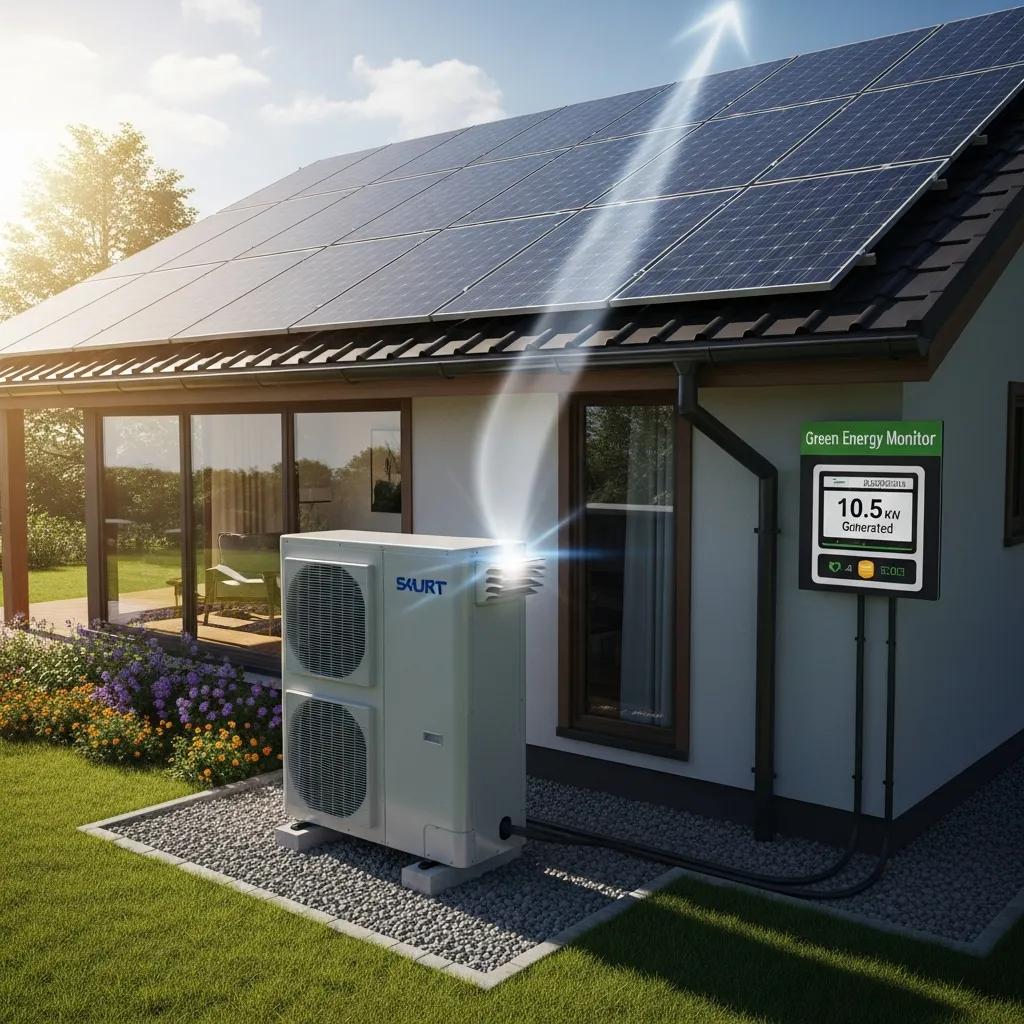
Pairing heat pumps with renewable generation such as rooftop solar PV and battery storage reduces operational carbon intensity and can shift energy use to times of high on-site generation, improving net emissions and economics. Integration considerations include inverter capacity, electrical service limits, and control strategies that coordinate heat pump operation with PV output and storage to maximize self-consumption. Combined systems also open pathways for demand flexibility and potential participation in time-of-use rate programs, which can lower bills and improve system economics. The next subsections detail benefits of pairing heat pumps with solar PV and outline a practical net-zero pathway for homes.
Key operational and financial benefits of pairing heat pumps with renewables include:
- Reduced grid electricity consumption and lower operational carbon when heat pumps run on onsite solar generation.
- Financial synergy through combined incentives and improved return on investment from coordinated system design.
- Load management opportunities via battery storage that shift heating/cooling to high-generation or low-rate periods.
What Are the Benefits of Combining Heat Pumps with Solar PV Systems?
Combining heat pumps with solar PV cuts operational emissions and electric bills by enabling direct use of on-site renewable generation for heating and cooling loads, especially when paired with smart controls that prioritize self-consumption. Solar arrays sized to offset a significant portion of annual heat pump energy can reduce grid dependency and improve payback while battery storage helps time-shift production to evening or morning heating needs. Practical pairing requires attention to PV sizing relative to heat pump load profiles, inverter and service capacity, and potential incentives that reward combined installations. A coordinated design that balances PV capacity, storage, and heat pump efficiency yields the best environmental and financial outcomes.
How Does Renewable Energy Integration Contribute to Net-Zero Homes?
Renewable integration is a core step in a net-zero roadmap that begins with efficiency improvements, followed by electrification (heat pumps), and then on-site renewables and storage to balance remaining loads. Net-zero targets measure annual energy balance; high-efficiency heat pumps reduce demand, while well-sized PV and storage match or exceed remaining consumption over a year. Control strategies, improved envelope performance, and demand flexibility round out the approach, ensuring that generation and reduced demand align across seasons. Documented energy modeling and monitoring help track progress toward net-zero goals and guide incremental investments.
What Maintenance Practices Ensure Long-Term Efficiency of Eco-Friendly Heat Pumps?
Sustained efficiency and environmental performance depend on routine maintenance that preserves airflow, refrigerant charge integrity, controls calibration, and system cleanliness. Effective maintenance combines homeowner DIY checks (filters, outdoor unit clearance) with scheduled professional tune-ups that include refrigerant leak inspections, electrical checks, and performance verification. A documented maintenance plan with recorded commissioning and annual service supports warranty compliance, preserves COP and seasonal ratings, and reduces the risk of refrigerant release or premature equipment failure. The following subsections provide practical maintenance tips and explain how regular service extends life and saves energy.
This numbered checklist outlines an actionable maintenance rhythm homeowners can adopt.
- Monthly/Quarterly Checks: Inspect and replace filters, keep outdoor unit clear of debris, and verify thermostat schedules.
- Annual Professional Tune-up: Request refrigerant leak testing, electrical safety checks, airflow measurements, and control calibration.
- Every 3–5 Years: Have a technician verify refrigerant charge against factory specifications and update firmware on smart controls.
- End-of-Life Disposal: Ensure certified recovery and recycling of refrigerants and responsible recycling of equipment components.
What Are the Best Eco-Friendly Heat Pump Maintenance Tips?
Prioritize actions that preserve efficiency while minimizing environmental risk: regularly change filters to maintain airflow, keep outdoor units unobstructed for optimal heat exchange, and use programmable or smart thermostats to reduce unnecessary runtime. Schedule annual professional inspections that include leak detection, refrigerant recovery procedures if required, and validation of system pressures and airflow. Use the maintenance visits to request documentation of refrigerant type and charge and to ensure that any replaced components are recycled properly. These steps not only improve COP and seasonal efficiency but also reduce the likelihood of refrigerant emissions that carry high climate impact.
How Does Regular Maintenance Support System Longevity and Energy Savings?
Consistent maintenance prevents small performance degradations from compounding into major failures, preserving efficiency and extending equipment life by years. Routine cleaning, calibration, and leak detection maintain rated COP and seasonal performance, which translates into predictable energy savings and fewer costly repairs. Industry data show that properly maintained HVAC systems can operate more efficiently and avoid premature replacements, lowering lifecycle environmental impact from manufacturing and disposal. Keeping a documented maintenance record supports warranty claims and provides a clear history for future owners, helping sustain the installation’s green benefits over time.
For next steps, homeowners should contact a qualified installer for an on-site assessment, Manual J sizing, and a proposed maintenance plan; Comfort Air Control is one example of a heat pump installation provider that emphasizes green practices and can assist with assessment, sizing, and ongoing maintenance planning.
